
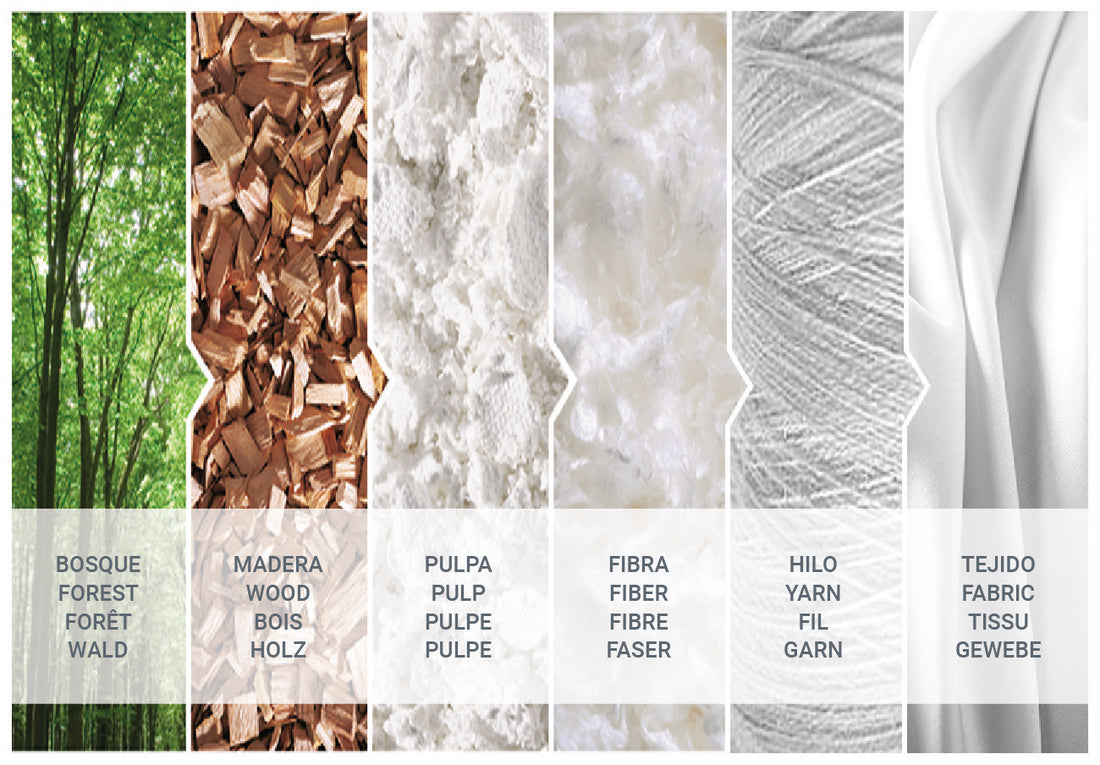
What are natural synthetic fabrics, and why does SueMe use them? If you have ever wondered how wood pulp becomes soft underwear or bamboo becomes a T-shirt, the answer lies in regenerated cellulose fibres. These materials combine a plant-derived raw material with modern textile manufacturing.
At SueMe, we choose fabrics for how they feel, how they perform and how they are made. Here is our guide to Modal, lyocell, bamboo viscose and organic cotton, and what each offers for everyday clothing and outdoor adventures.
What are natural synthetic fabrics?
The term is often used informally for regenerated cellulose fabrics such as Modal, viscose and lyocell. Unlike cotton, which is spun from naturally occurring fibres, these materials are manufactured by dissolving plant cellulose and regenerating it into textile fibres. Unlike conventional polyester, their cellulose feedstock comes from plants rather than fossil-derived polymers.
Modal vs bamboo viscose vs organic cotton
| Fabric | Raw material | Typical qualities |
|---|---|---|
| Modal | Wood cellulose, often beechwood | Soft, smooth, absorbent |
| Bamboo viscose | Bamboo cellulose | Soft, draping, absorbent |
| Lyocell | Wood cellulose | Smooth, absorbent, strong |
| Organic cotton | Organically grown cotton | Breathable, versatile, familiar feel |
| Polyester | Usually fossil-derived polymers | Low moisture absorption, often quick-drying |
Why we use TENCEL™ Modal for underwear
Our Tree Trunks and Beech Shorties use beechwood-derived TENCEL™ Modal with added stretch. Modal's smooth feel is particularly appealing in garments worn directly against the skin. Carefully positioned seams and a brushed waistband help minimise rubbing, while the lightweight construction makes our underwear practical for travel and active days.
Explore our men's Modal boxer trunks and women's Modal boy shorts, or stock up with our men's underwear multipacks and women's underwear multipacks.
Why blend bamboo viscose with organic cotton?
Our signature T-shirts combine 70% bamboo viscose and 30% organic cotton for a soft, lightweight fabric. The blend is designed for everyday wear, hiking, cycling and layering. Our Modal Athleisure tees offer an alternative for those who prefer a stretchier fabric.
Discover our men's bamboo T-shirts and women's bamboo T-shirts.
Are regenerated cellulose fabrics sustainable?
Plant-derived fibres can offer advantages, but their environmental impact depends on forestry or farming practices, chemical recovery, energy, water use, dyeing and garment construction. Bamboo viscose is chemically processed; it is not the same as mechanically extracted bamboo fibre. Lyocell is commonly produced using a solvent recovery process, while Modal and viscose production methods vary by manufacturer.
For more information about the branded fibres we use, visit TENCEL™. A fibre's plant origin does not automatically make a finished garment carbon neutral, biodegradable or compostable, particularly when it contains elastane, dyes or other components.
Which fabric is best for underwear and T-shirts?
For underwear, we favour Modal for its smooth feel and comfortable stretch when blended with elastane. For everyday T-shirts, our bamboo viscose and organic cotton blend balances softness and structure. For intensive exercise, drying speed and moisture management also depend on fabric weight, knit and conditions, not simply the fibre name.
Whatever your next adventure, choose clothing that feels good, suits your activity and is worth wearing repeatedly. That is the thinking behind SueMe.